January 12, 2026
The 11-Set Threshold: New Research Reveals Diminishing Returns on Session Volume
New 2025 research reveals a critical 11-set threshold where additional training volume yields diminishing returns. Learn how to optimize your session structure for maximum growth.
The Volume Trap
For years, the iron game has worshipped volume. More sets, more reps, more days in the gym. But what if the latest science suggests your devotion to high-volume training is actually holding back your gains? A groundbreaking 2025 meta-analysis from Florida Atlantic University, spearheaded by hypertrophy researcher Brad Schoenfeld, has uncovered a critical tipping point where the law of diminishing returns kicks in hard.
Introducing the PUOS Concept
The researchers introduced a new term: PUOS, or 'Point of Undetectable Outcome Superiority'. In plain English, this is the specific training dose where the benefits to muscle growth become statistically insignificant compared to lower volumes. After crunching the numbers from dozens of studies, the data revealed a surprisingly low ceiling for effective single-session training.
The Magic Number: 11 Fractional Sets
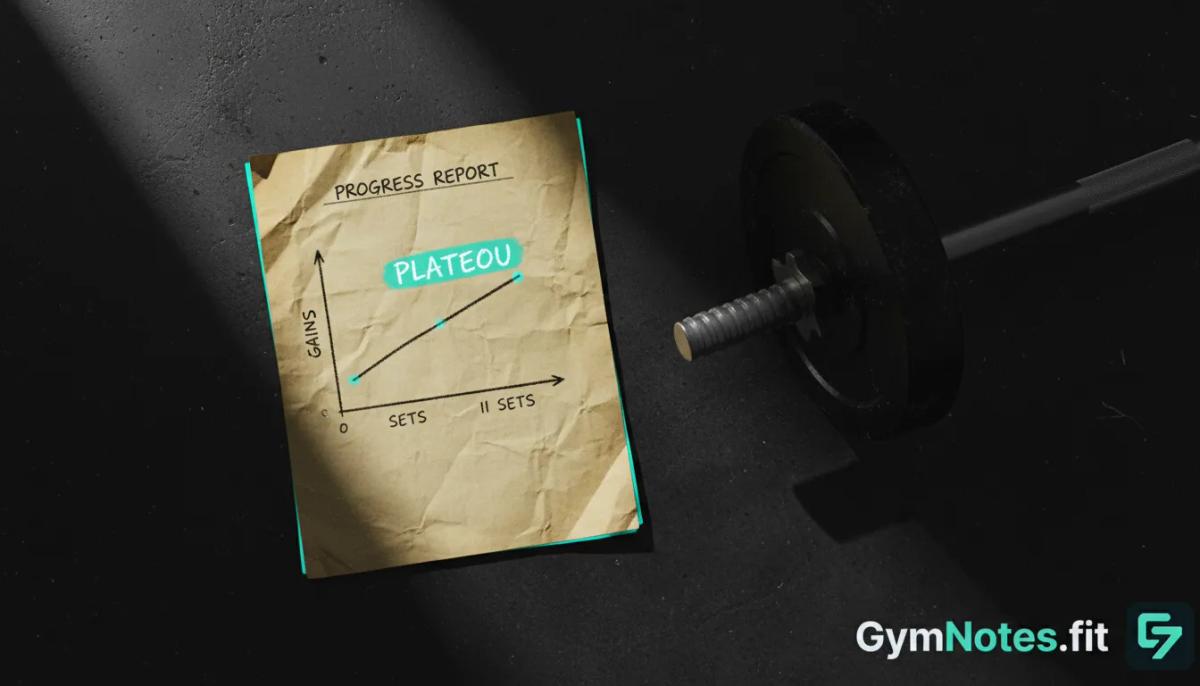
The analysis found that for hypertrophy, muscle gains plateau after approximately 11 fractional sets per muscle group, per session. What's a fractional set? It's a clever way to account for compound movements. A set of squats isn't just a quad set; it's a fractional set for quads, glutes, hamstrings, and even calves. The researchers calculated the cumulative stimulus and discovered that once you hit that ~11-set threshold within a workout, you're essentially spinning your wheels.
Strength Gains Taper Even Faster
Interestingly, the study showed that strength gains have an even lower ceiling. This makes intuitive sense; strength is highly neural and requires quality practice, not just sheer work. Grinding through endless sets when your form and focus are already shot is counterproductive. You're accumulating fatigue without adding meaningful stimulus.
Practical Application for the GymNotes Lifter
So, what does this mean for your training split?
1. Quality Over Quantity: Your goal should be to reach the PUOS threshold with maximum efficiency. Instead of 5 sets of bench press followed by 4 sets of dumbbell press and 3 sets of chest flys (totaling 12+ 'chest' sets), consider 3 hard sets of bench press and 2 sets of weighted dips. You're hitting the same stimulus with less junk volume.
2. Split Smarter: If you're a 4-day upper/lower split lifter, this is good news. You can spread your weekly volume (20-30 sets per muscle group is still the gold standard) across two sessions. For example:
- Upper Day 1 (Monday): 10-12 sets for chest, back, shoulders
- Upper Day 2 (Thursday): 10-12 sets for chest, back, shoulders
This keeps each session under the ~11-set 'diminishing returns' zone while still accumulating an optimal weekly dose.
3. Prioritize Stretch-Mediated Hypertrophy: The same 2025 research wave reinforces the power of training in the stretched position. The stretched part of a rep (the bottom of a squat, the deep stretch of a fly) provides a potent growth signal. This means you can achieve more with less. Two sets of deep, controlled Romanian Deadlifts will likely spark more hamstring growth than six sets of half-rep leg curls.
The GymNotes Philosophy: Data, Not Dogma
This isn't an excuse to be lazy. It's an argument for being precise. Training to failure on your last set? Smart. Training past failure with forced reps and drop sets on every exercise? Probably junk. The stoic lifter accepts that growth happens when the stimulus is high and the recovery is adequate. Piling on sets beyond the point of benefit only borrows from your recovery budget without paying dividends in growth.
Use your GymNotes app to track not just your totals, but your 'effective sets'. Note how you felt on set 3 versus set 6. Was that last set your best, or were you just going through the motion? The data will tell you when you've hit your PUOS for the day. Trust it. Do the work that matters, then go home and grow.
Sources:
- ACE Fitness, 'More Muscle, Less Guesswork' (2025)
- Men's Health UK, 'Best New Studies for Muscle Growth' (2025)
- Lehman College/Schoenfeld Study, Journal of Applied Physiology (2025)
- FAU, 'To Build Muscle and Gain Strength, Train Smarter – Not Longer' (2025)
- ACSM Top Fitness Trends for 2026
- Economic Times, 'How to build muscle faster in 2026' (2026)