January 16, 2026
Bench Press Biomechanics: The Science of Effective Force Production
Master the biomechanics of the bench press. Learn how to use leg drive, optimal bar path, and the 'Goldilocks' arch to maximize force and hypertrophy.
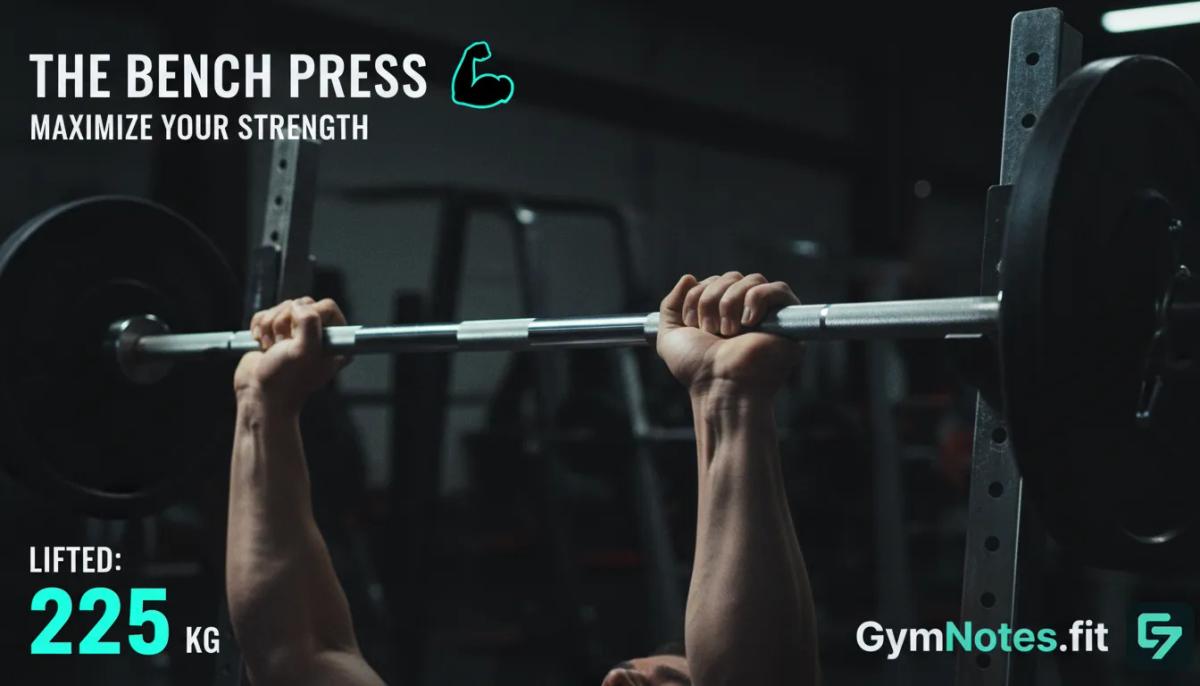
The Mechanics of the Bench Press: Beyond Just 'Pushing'
If you treat the bench press as purely an upper-body exercise, you are leaving kilograms on the platform and centimeters of muscle growth on the table. For the intermediate lifter, the plateau usually isnt a matter of effort; its a matter of biomechanical inefficiency. To master the bench press, we must look at it through the lens of force transmission and leverages.
The Arch: Stability vs. Range of Motion
There is a common misconception that a lumbar arch is 'cheating.' In reality, a modest arch is a tool for shoulder health and force production. By retracting and depressing your scapulae into the bench, you create a stable platform. This tilt slightly changes the angle of the press to favor the lower fibers of the pectoralis major—which are mechanically advantaged to move heavier loads.
However, for pure hypertrophy, we must be careful. While an extreme powerlifting arch reduces the range of motion (ROM) to move the most weight, muscle growth is heavily driven by the stretch-mediated hypertrophy of the pec at the bottom of the movement. The goal for a GymNotes athlete is to find the 'Goldilocks zone': enough of an arch to protect the rotator cuff and create stability, but not so much that you cut off the most productive part of the ROM.
Leg Drive: The Kinetic Chain
Leg drive is the most misunderstood component of the bench press. You arent using your legs to push the weight up; you are using them to lock your body into the bench. By pushing your feet 'away' from you (as if trying to slide your head off the top of the bench), you create tension that travels through your quads, hips, and into your upper back.
This tension eliminates the 'energy leaks' that occur when your torso shifts under heavy load. A rigid torso means 100% of the force generated by your pecs and triceps goes directly into the bar.
The 'J-Curve' Bar Path
Unlike the squat or deadlift, a perfectly vertical bar path is actually inefficient for the bench press. Because of the way the glenohumeral joint is structured, pushing straight up from the lower chest puts immense strain on the anterior deltoids and creates a longer moment arm from the shoulder.
High-level benchers utilize a 'J-curve.' The bar starts over the shoulder joints, descends to the lower sternum, and then—critically—is pushed back toward the face immediately off the chest. This 'racking' movement reduces the horizontal distance between the bar and the shoulder joint, making the lockout significantly easier.
Data-Driven Success
The intermediate plateau is where most lifters fail because they stop thinking and start just 'doing.' By tracking not just your weight, but your perceived exertion (RPE) and technical consistency, you can identify if a plateau is due to fatigue or a breakdown in these biomechanical principles.
Stop chest pressing. Start benching. Control the descent, harness the power of your legs, and drive the bar back over your shoulders. Efficiency is the shortest path to growth.