January 15, 2026
The Deadlift Paradox: Why Heavy Pulls Might Be Stalling Your Gains
Is the conventional deadlift killing your gains? We dive into the biomechanics of axial fatigue and why the RDL is superior for muscle growth.
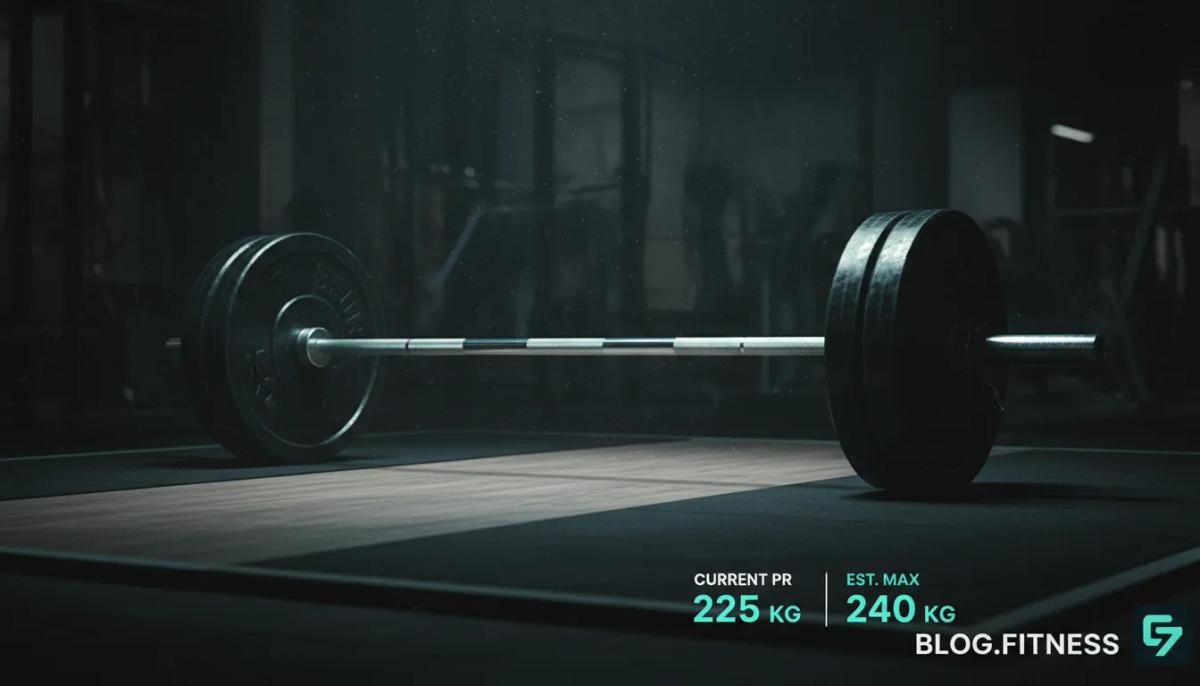
The Deadlift Dilemma: Stimulus vs. Fatigue
For the intermediate lifter, the conventional deadlift is often viewed as the ultimate test of strength. It is the king of the 'Big Three.' However, if your primary goal is hypertrophy—building a thick, powerful back and massive hamstrings—the conventional deadlift might actually be your least efficient tool. In the world of biomechanics, we look at the 'Stimulus-to-Fatigue Ratio' (SFR). When we analyze the deadlift through this lens, the data reveals a stark reality: the systemic tax often outweighs the local growth signal.
The Problem with Axial Loading
Axial loading refers to the compressive force placed on the spine. Because the deadlift allows you to move the most absolute weight of any lift, it generates immense central nervous system (CNS) fatigue. A heavy set of five deadlifts doesn't just fatigue your erectors; it drains your systemic resources for days.
Recent data in biomechanics suggests that for maximal hypertrophy, we want to maximize the internal moment arm for the target muscle while minimizing unnecessary systemic load. The conventional deadlift distributed tension across the entire posterior chain, but because of the floor-start and the leverage required, the 'sticking point' often limits the stimulus before the target muscles (like the lats or hamstrings) reach true mechanical failure.
The Hypertrophy Alternative: The Romanian Deadlift (RDL)
If you want the benefits of the deadlift without the recovery cost, the RDL is objectively superior for hypertrophy. Why?
- Constant Tension: Unlike the conventional pull which resets on the floor, the RDL keeps the target muscles under load throughout the entire eccentric phase.
- Stretch-Mediated Hypertrophy: Modern research has highlighted that training a muscle in its lengthened position is a potent driver for growth. The RDL places the hamstrings and glutes under peak tension while they are stretched.
- Reduced CNS Drain: By using roughly 20-30% less weight than a conventional pull but achieving higher local muscle activation, you save your 'recovery capital' for other movements.
When to Keep the Conventional Pull
There is still a place for the conventional deadlift in a minimalist program. If you find deep psychological satisfaction in moving heavy iron—or if you're a powerlifter—keep it in. But from a data-driven efficiency standpoint, it should be treated as a 'strength skill' rather than a 'growth movement.'
The GymNotes Recommendation
To optimize your back and leg days, consider shifting your heavy pulls to a Romanian or Stiff-Legged variation. Track your RPE (Rate of Perceived Exertion) and notice how your recovery improves throughout the week. When you stop chasing absolute numbers and start chasing internal tension, that’s when the real gains begin. Use the GymNotes app to track your RDL progress and ensure you are hitting that progressive overload in the 8-12 rep range—the sweet spot for growth without the burnout.