January 27, 2026
The Bone Structure Trap: The Hidden Ceiling on Your Hypertrophy Potential
A groundbreaking 2025 study reveals that 85% of your muscle-building potential is determined by your total bone volume. Learn why your frame is the ultimate ceiling for hypertrophy.
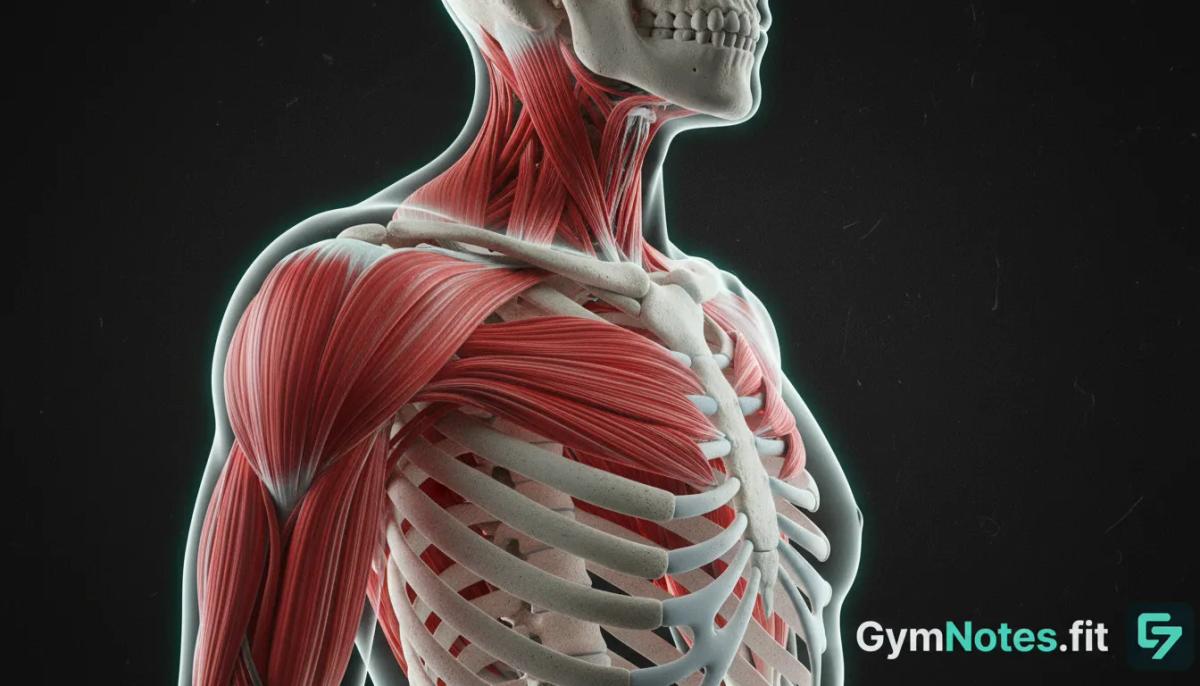
The fitness industry loves to tell you that you are one 'special' Bulgarian split-squat variation away from a pro-level physique. But recent data suggests your ceiling isn't determined by your exercise selection, your supplement stack, or even your 'grind'—it’s etched into your skeleton.
The Bone-Muscle Connection
A groundbreaking 2025 study led by Dr. Brad Schoenfeld and published in the Journal of Applied Physiology has fundamentally shifted how we view hypertrophy limits. Researchers used AI to analyze 3D MRI scans of 102 adults, measuring 70 different muscles and 13 bones.
The findings were staggering: Total bone volume explained approximately 85% of the variation in total muscle volume.
This suggests that for the vast majority of lifters, the thickness and volume of your frame—not your height or your BMI—provide the structural blueprint for how much lean mass you can actually carry. While we talk about 'hard gainers' as a matter of metabolism, the science suggests it might actually be a matter of 'thin frames.' If the framework (bone) is smaller, the body lacks the surface area and mechanical support to anchor massive amounts of contractile tissue.
Why This Matters for Serious Lifters
This doesn't mean you can't get big; it means your 'genetic limit' is more predictable than we previously thought. The study found that local bone size was the strongest predictor for individual muscles in 63 out of 70 cases. If you have thick wrists and wide clavicles, your ceiling for shoulder and arm hypertrophy is biologically higher than someone with a narrower frame.
Furthermore, supplementary research from January 2026 reinforces that because our ceiling is largely fixed by our skeletal frame, the speed at which we reach it is best managed through high-effort sets near failure (RPE 9-10), rather than obsessing over specific rep ranges or 'novel' exercises.
⚡ The GymNotes.fit Takeaway
- Stop Blaming Metabolism: Your ability to pack on mass is tied more to your skeletal volume than your caloric burn. Embrace your frame's specific potential.
- Focus on Frame-Filling: Since the blueprint is fixed, prioritize high-tension movements that maximize the surface area of your specific bone structure.
- Intent Over Intensity: Since you can't change your bone volume, maximize the muscle you can grow by training at a high effort (proximity to failure), as rep ranges (10 vs 20) have shown identical growth when effort is matched.