January 18, 2026
The Squat Depth Debate: Finding Your Active Range for Max Growth
Is deeper always better? We break down recent 2024-2025 squat research to find the perfect depth for muscle growth without destroying your joints.
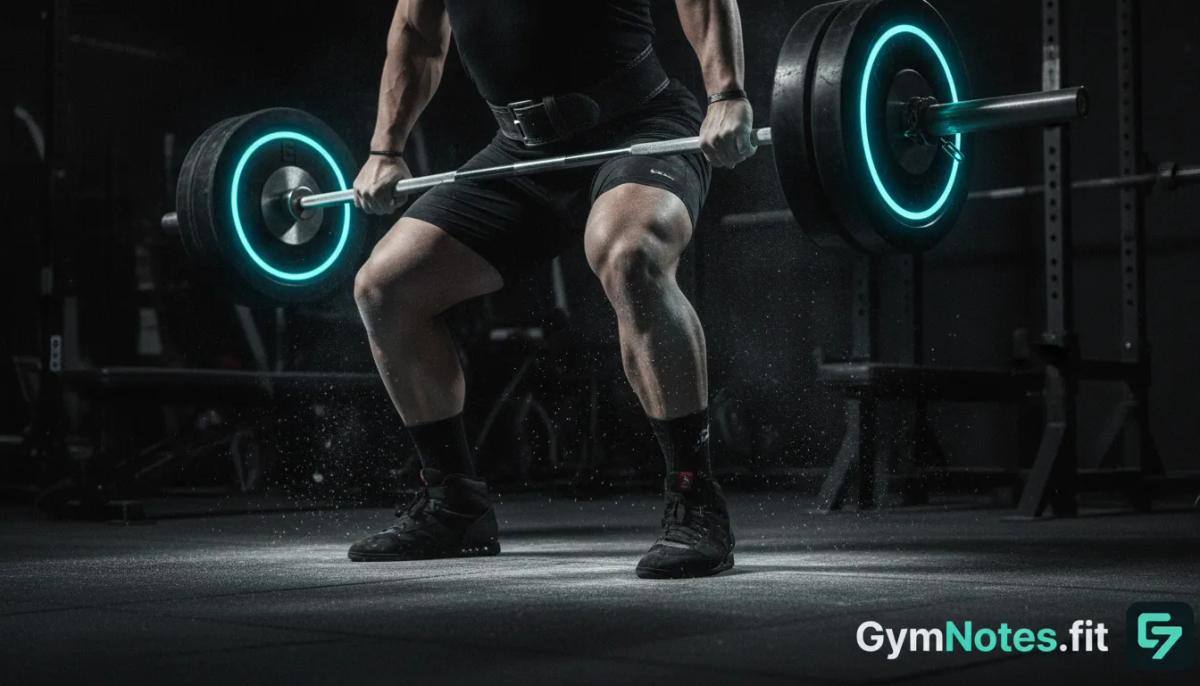
The Myth of the Ass-to-Grass Requirement
For decades, the iron game has been divided by a singular question: How deep should you squat? Purists argue that anything short of 'ass-to-grass' (ATG) is a waste of time, while others claim horizontal femur alignment is the gold standard for knee health.
However, emerging research in 2024 and 2025 is shifting the conversation from dogmatic depth to 'functional range of tension'. If your goal is maximum hypertrophy with minimum joint wear, the answer isn't as deep as you think.
The Science of Stretch-Mediated Hypertrophy
We know that training a muscle in its lengthened state is a potent driver for growth. In the squat, this occurs at the bottom of the movement where the quadriceps are under peak stretch. However, a landmark 2024 study suggests there is a 'point of diminishing returns' for depth. Once you pass the point where your pelvis begins to tilt (the notorious 'butt wink') or your heels lift, the tension shifts from the contractile tissue (muscle) to the passive structures (ligaments and discs).
To optimize for hypertrophy, you need to find the deepest point where you can maintain active tension in the quads without losing pelvic neutrality.
Why Constant Load Progression Isn't the Only Answer
A recent study co-authored by Brad Schoenfeld in the Journal of Applied Physiology (2025) highlights that muscle growth can occur effectively even without constant increases in external load. For the minimalist lifter, this is a game-changer. Instead of chasing a 500lb squat that destroys your recovery, you can maximize gains by perfecting your 'active ROM' and utilizing tools like tempo manipulation.
The Technique Mastery Checklist
To master the squat for hypertrophy, focus on these three pillars:
- Control the Eccentric: A 3-second descent ensures the muscle is doing the work, not gravity. This increases time under tension in the lengthened position.
- The Pause: Use a 1-second pause at your deepest 'active' point. This eliminates momentum and forces the quads to initiate the concentric drive.
- Individualize Your Depth: Your hip anatomy (socket depth and femoral neck angle) determines how deep you can safely squat. If your lower back rounds at parallel, forcing ATG is a recipe for a herniated disc, not bigger quads.
Practical Application for GymNotes Users
Stop chasing numbers at the expense of mechanics. In your next session, prioritize 'quality over weight'. Track your RPE (Rate of Perceived Exertion) and ensure you are leaving 1-2 reps in reserve. If your depth starts to shallow out as fatigue sets in, the set is over—don't count 'half-reps' as volume.
By staying within your active range of motion and focusing on high-tension repetitions, you can achieve elite-level hypertrophy while keeping your joints healthy for the long haul. Minimalist training isn't about doing less; it's about doing what works, better.